
Maruti Suzuki India (MSI) plans to drive in CNG trims across its product range as it remains bullish over long-term prospects of the segment amid increase in fuel prices and drop in diesel car sales, according to a senior company official. The company, which sold around 1.62 lakh CNG cars last fiscal year, is also counting on the rapid expansion of CNG dispensing outlets across the country to bring in more CNG products. Bullish on the expansion of the sales network, the automaker expects its CNG car sales to almost double this fiscal year over 2020-21.

It may not have a bold design but it addresses the needs for comfortable and affordable commuting.
While sales of compact cars, including models such as Swift, Celerio, Ignis, Baleno and Dzire declined, sales of utility vehicles, including Vitara Brezza, S-Cross and Ertiga, increased 26.3 per cent to 19,177 units as compared to 15,178 in the year-ago month.

In its FIR filed recently, the CBI has named Khattar and his company Carnation Auto India Limited for allegedly causing a loss of Rs 110 crore to Punjab National Bank.

Seven auto companies lost share in the current year because of different reasons.

In the domestic market, sales grew by nine per cent at 64,857 units as against 59,539 units in April last year, while exports grew by 146 per cent at 6,891 units as against 2,797 units last year, the company said in a statement. This is the fourth consecutive month of sales crossing 70,000-units mark, it added.

The country's largest carmaker Maruti Suzuki India (MSI) aims to sell 4-6 lakh CNG units in the current fiscal year depending upon supply situation of essential components, as per a senior company official. The company sold about 2.3 lakh CNG units in 2021-22. MSI currently sells nine of its 15 models with CNG powertrain and is looking to drive in more models with such technology in the coming days.

Swift is the highest selling car from the Maruti stable sicne its launch in 2005.

M&M also saw its domestic passenger vehicle sales grow by 1 per cent, while Toyota Kirloskar Motor witnessed a decline in its PV sales.

At present four products -- Baleno, Baleno RS, S-Cross and Ignis -- are sold through the channel.

While Hyundai Motor India reported a marginal growth, Toyota Kirloskar Motor witnessed a dip in sales last month.
Maruti Udyog Ltd, is expected to sell 6.5 lakh units during this fiscal and maintained 54 per cent market share, a senior company official said on Wednesday.

Maruti is expected to post double-digit growth on product launches and good demand for entry-level cars.

Equity benchmark Sensex rallied over 300 points in opening trade on Monday, tracking gains in index majors HDFC twins, SBI and ICICI Bank amid mixed cues from global markets.
India's car market leader Maruti Suzuki India unveiled two concept models - sedan Ciaz and crossover SX4 S-Cross - as it looks to enhance its position in the bigger sedan segment going forward.

Its sales grew 21% to 165,346 units

At a time when consumers increasingly embrace green mobility solutions, it is not electric cars but hybrids that are taking the lead, as automotive sales data indicate. Since January, 64,097 electric cars have been sold compared to 266,465 hybrids, according to data from the ministry of road transport and highways' Vahan dashboard. Hybrid car sales have surged from 4.42 per cent of the 4.1 million cars sold in calendar year 2022 to 7.2 per cent this year.

Ford India and Renault too reported good sales growth in April
At a time when consumers increasingly embrace green mobility solutions, it is not electric cars but hybrids that are taking the lead, as automotive sales data indicate. Since January, 64,097 electric cars have been sold compared to 266,465 hybrids, according to data from the Ministry of Road Transport and Highways' Vahan dashboard. Hybrid car sales have surged from 4.42 per cent of the 4.1 million cars sold in calendar year 2022 to 7.2 per cent this year.

iM-4 will be manufactured in India and exported to Europe from 2017.

Maruti Suzuki had discontinued the mid-sized sedan Baleno in 2006, which was replaced by SX4 later on.

Both these are super compact SUVs that will be competing against each other at a similar price point

Gains in IndusInd Bank, HCL Tech, TCS, Tech Mahindra, NTPC, ITC, JSW Steel and Tata Steel helped the barometer scale a fresh high. Axis Bank fell the most by 1.26 per cent, M&M by 0.99 per cent and Hindustan Unilever by 0.67 per cent. Maruti, Bajaj Finserv, Bharti Airtel and HDFC Bank and Infosys also declined.
The auto industry is on a roll with the sales of passenger cars showing robust growth in November this year as against the sales of last November.

Among the Sensex firms, Adani Enterprises and Adani Ports sustained their gaining momentum and traded higher by 4.40 per cent and 4.37 per cent, respectively. BPCL, Axis Bank, Mahindra & Mahindra and SBI were the other major gainers. On the other hand, HCL Tech, Infosys and Bajaj Auto traded in the negative zone with a loss of up to 1.54 per cent.
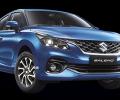
Maruti Suzuki India (MSI) will keep consolidating its existing product line-up, including hatchbacks, while bolstering presence in the fast growing SUV segment to power its way back to 50 per cent market share in the domestic passenger vehicle market, as per a senior company official. The country's largest carmaker, which has seen its market share drop to 43.38 per cent in FY22 from 47.7 per cent in FY21, aims to bring in multiple SUV products with focus on new technologies like hybrid powertrains in order to enhance fuel efficiency, making them comparable or better than diesel-powered models that are currently being sold in the market, especially by its Korean rivals. With no intention of making a comeback in the diesel segment, MSI is also focusing on increasing its play in the CNG segment to bring in additional volumes.

Renault Kwid is also the longest of the lot and at 3680mm length, the vehicle may turn out to be the most spacious in its segment.

Around 23 per cent of all units sold by the company in the domestic market currently are diesel cars.

That means a manufacturer looking at a market like India needs to decide whether small, cheap cars or small, expensive cars or both will work better for them, says Pavan Lall.

The ongoing elections and overall subdued market sentiment continue to affect the sales momentum

The company had introduced the AGS technology in India with Celerio and it currently offers it in Alto K10 and WagonR also.

Benchmark equity indices Sensex and Nifty closed higher on Friday after two days of fall, helped by buying in metal, telecom and auto stocks amid a firm trend in global markets. Automakers led by Maruti Suzuki India, Hyundai, Mahindra & Mahindra reporting robust wholesales of passenger vehicles and GST collections crossing Rs 1.50 lakh crore for the third straight month in May also added to the optimism. The 30-share BSE Sensex climbed 118.57 points or 0.19 per cent to settle at 62,547.11.

Maruti Suzuki India to hike prices of its vehicles across models by up to Rs 20,000 from January to offset rising costs.

Maruti's sales of the compact segment comprising Swift, Estilo, Ritz, Dzire and Baleno went up by 9.9% to 45,579 units
Buoyed by good response to its new Alto 800, which has touched 21,200 bookings within a week of launch, Maruti Suzuki India is looking to cash in on the ongoing festive season sales.

Strong festive demand in October helped carmakers register a seven-per cent volume growth in the domestic market, even as the largest player, Maruti Suzuki, reported low single-digit growth.

Maruti Suzuki India, country's largest carmaker on Thursday reported 3.7 per cent rise in total sales in September.

However, sales of mini segment cars, including Alto and WagonR, declined 7.9 per cent to 25,524 units from 27,712 in the year-ago month

From the Sensex pack, Maruti, Axis Bank, Tata Consultancy Services, Nestle, Infosys, Mahindra & Mahindra, Tech Mahindra and Bharti Airtel were the major laggards. Power Grid, Sun Pharma, HCL Technologies, Larsen & Toubro and UltraTech Cement were the gainers.

Of the 15 car manufacturing companies in India, eight have a market share of below 2 per cent, raising questions about their long-term future in a competitive market that has already seen Ford Motors and General Motors slam the door on India.
